Introducing CIQTEK tungsten filament Scanning Electron Microscope SEM3200 provides researchers with clear nanoscale images, allowing them to examine the microstructure and morphology of the coating layers visually. Additionally, the equipped Energy Dispersive Spectrometer (EDS) enables precise analysis of material composition and element distribution, effectively guiding process optimization in research and development.

- Dr. Zhang, Head of Major Customers/Quality Director
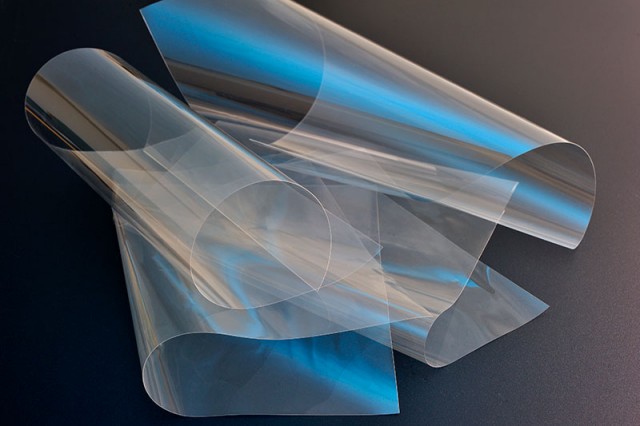
Optical films

Coating: Giving Products a "Super Nanocoating"


The development of coating technology not only showcases the depth of materials science but also demonstrates the precision manufacturing processes. Dr. Zhang explains, "Our company has developed superior-performing coatings such as diamond-like carbon (DLC)/ titanium-aluminum-carbon (TAC) films, nitride films, carbide films, high-density metal/alloy films, and optical films. These coating layers are like giving products a 'super nanocoating'."
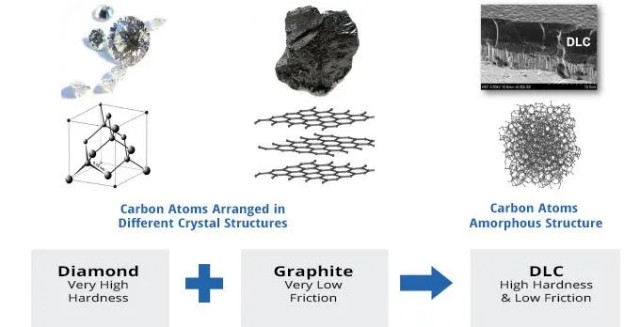
 Diamond-like carbon (DLC)


CIQTEK Scanning Electron Microscope Enhances the Quality of Nanocoating Layers


Dr. Zhang states, "With the SEM3200, we can readily detect the total thickness of the coating layers, as well as the thickness and composition of each designed layer (substrate layer, transition layer, surface layer) in the samples provided by customers. Our in-house research and development can quickly provide design solutions. This enhances the efficiency of coating process development."
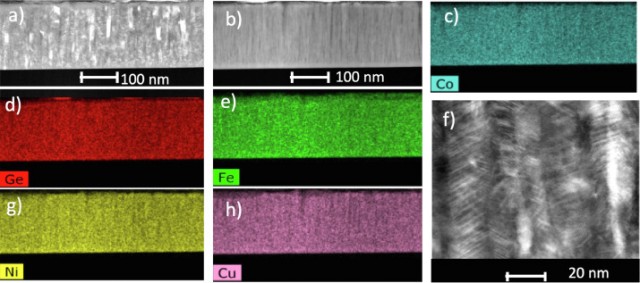
 High density metalalloy films

The SEM3200 plays a crucial role in research and development and also acts as a key tool in quality control. "We can use it for failure analysis," says Dr. Zhang."Through comprehensive testing and characterization, we can identify the root causes of defective products, continuously improving product quality and yield."


Scanning Electron Microscopes Facilitate the High-quality Development of Manufacture 


Dr. Zhang expresses that the SEM3200 not only operates in good condition with a user-friendly interface and high automation but also receives prompt responses from the CIQTEK after-sales team, solving many practical problemsThis not only reflects the outstanding performance of CIQTEK products but also demonstrates the significant role of high-end scientific instruments in supporting the development of high-tech enterprises.
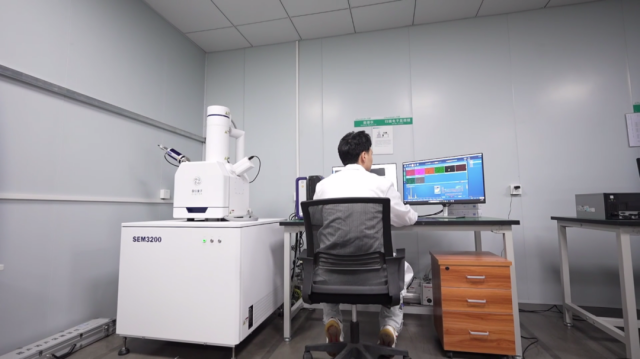
 

In the future, CIQTEK will continue to provide first-class research solutions for more high-tech companies like coating, jointly promoting the flourishing development of the scientific and technological industry.
The main pollutants in water bodies include pharmaceuticals, surfactants, personal care products, synthetic dyes, pesticides, and industrial chemicals. These pollutants are challenging to remove and can adversely affect human health, including the nervous, developmental, and reproductive systems. Therefore, protecting water environments is of utmost importance.


In recent years, advanced oxidation processes (AOPs) such as Fenton-like reactions, persulfate activation, and UV-light-induced AOPs (e.g., UV/Cl2, UV/NH2Cl, UV/H2O2, UV/PS) as well as photocatalysts (e.g., bismuth vanadate (BiVO4), bismuth tungstate (Bi2WO6), carbon nitride (C3N4), titanium dioxide (TiO2) have gained attention in the field of water treatment and environmental remediation.


These systems can generate highly reactive species such as hydroxyl radicals (•OH), sulfate radicals (•SO4-), superoxide radicals (•O2-), singlet oxygen (1O2), etc. These techniques significantly enhance the removal rates of organic pollutants compared to conventional physical and biological methods. The development of these water treatment technologies greatly benefits from the assistance of Electron Paramagnetic Resonance (EPR) technology.


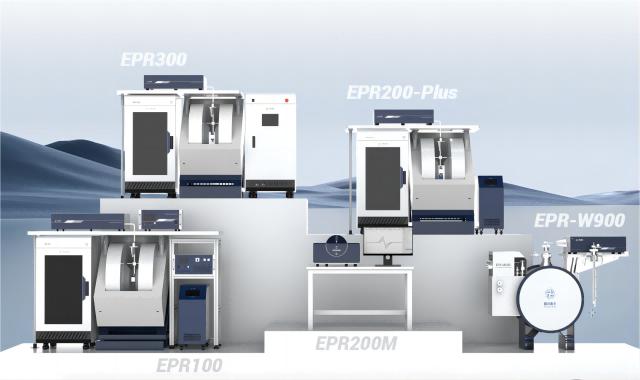
CIQTEK offers the desktop Electron Paramagnetic Resonance spectrometer EPR200M and the X-band continuous-wave Electron Paramagnetic Resonance spectrometer EPR200-Plus, which provide solutions for studying photocatalysis and advanced oxidation processes in water treatment.


Application Solutions of Electron Paramagnetic Resonance (EPR) technology in water treatment research


- Detect, identify, and quantify reactive species such as •OH, •SO4-, •O2-, 1O2, and other active species generated in photocatalytic and AOPs systems.


- Detect and quantify vacancies/defects in remediation materials, such as oxygen vacancies, nitrogen vacancies, sulfur vacancies, etc.


- Detect doped transition metals in catalytic materials.


- Verify the feasibility and assist in optimizing various parameters of water treatment processes.


- Detect and determine the proportion of reactive species during water treatment processes, providing direct evidence for pollutant degradation mechanisms.

 Electron Paramagnetic Resonance


Application Cases of Electron Paramagnetic Resonance (EPR) technology in water treatment research


Case 1: EPR in UV/ClO2-based advanced oxidation technology


- EPR study of the degradation process of fluoroquinolone antibiotics in a UV-mediated AOPs system.


- Degradation of pharmaceuticals and personal care products (PPCPs) in water by chlorine dioxide under UV conditions.


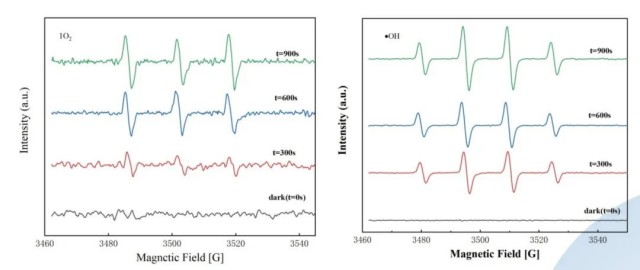
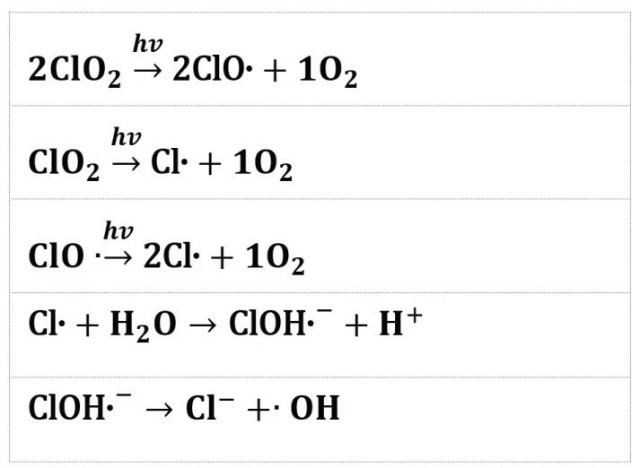
- EPR detection and qualitative analysis of •OH and singlet oxygen as active species in the system.


  • - Increase in •OH and 1Oconcentrations with longer irradiation times, promoting antibiotic degradation.
  •  

- EPR detection of •OH and 1O2 concentrations can be used to optimize PPCPs treatment processes.

 EPR in UVClO2 based advanced oxidation technology

EPR in UVClO2 based advanced oxidation technology

Case 2: EPR in Fenton-like advanced oxidation technology


  • - Degradation of phenylurea herbicides (e.g., isoproturon, linuron) in water by Fenton-like reactions.
  •  
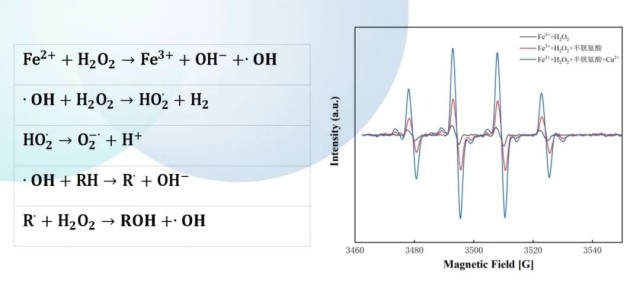
  • - EPR detection, identification, and quantification of all reactive species in the system.
  •  
  • -EPR-assisted optimization of radical generation rates, such as pH, hydrogen peroxide concentration, transition metal ions, etc.
  •  

-Increased hydroxyl radical concentrations and enhanced pollutant degradation with the addition of cysteine and Cu2+.


-EPR detection and quantification of hydroxyl radicals can directly validate the herbicide degradation mechanisms.

 EPR in Fenton-like advanced oxidation technology

Case 3: EPR in TiO2-based photocatalysis technology


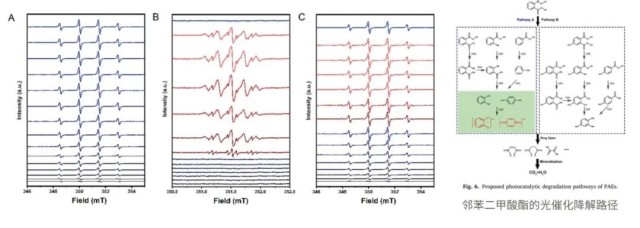
  • -In situ EPR reveals the promotion of phthalic acid esters (PAEs) degradation and mineralization in water by PAEs-TiO2, resulting in nearly 100% detoxification of water.
  •  
  • -In situ EPR detection of intermediate radicals, such as •OH and PAEs' semiquinone anions, during the opening process of PAEs.
  •  
  • -Combined in situ EPR and quantitative analysis suggest a higher level of opening formation on selective PAEs-TiO2 photocatalysts.
  •  

-Combining in situ EPR with UPLC-QTOF/MS provides insights into the degradation pathways of PAEs on PAEs-TiO2 and TiO2 photocatalysts.

 EPR in TiO2-based photocatalysis technology

Photocatalysis technology mainly relies on the absorption of solar energy by semiconductor photocatalysts, which generates separated photoinduced electrons and holes. These reactive species, such as •OH and •O2-, formed on the surface of the photocatalyst, can degrade pollutants through processes such as addition, substitution, and electron transfer.


Moreover, these techniques efficiently and broadly disinfect and sterilize water, leading to water purification and environmental restoration. The self-developed Electron Paramagnetic Resonance Spectrometer by CIQTEK can provide solutions for studying the mechanisms of reactive species, pollutant degradation pathways, and active sites of catalysts involved in water treatment processes.


The world of medical science is constantly evolving, presenting breakthrough technologies that propel our understanding of the human brain to new heights. Among these wondrous advancements, Brain Imaging Fiber stands out as a pinnacle of innovation, offering an unparalleled gateway into the intricate workings of the mind. In this article, we will explore the unique features and benefits of Brain Imaging Fiber, with a specific focus on Fiber Optic Bundles, Customized Optical Fibers, and their enthusiastic following.

1. Fiber Optic Bundles: Unleashing the Potential of Light

At the heart of Brain Imaging Fiber lies the remarkable Fiber Optic Bundle. Designed to transmit light with precision and efficiency, these bundles revolutionize the field of neuroimaging. By capturing light signals emitted from the brain, they enable researchers to unravel the complex tapestry of neural activity, leading to astonishing discoveries and a deeper understanding of the brain’s inner workings.

2. Customized Optical Fibers: Shaping the Future of Neuroscientific Research

In the realm of Brain Imaging Fiber, Customized Optical Fibers take center stage. With their tailorable nature, these fibers open up a world of possibilities for neuroscientists and medical professionals alike. By adapting to specific requirements, they ensure accurate and reliable data acquisition, facilitating precise diagnosis and treatment in the field of neurology. The ability to customize these fibers enables researchers to explore new experimental paradigms, pushing the boundaries of brain exploration even further.

3. Unparalleled Benefits for Enthusiasts

For Fiber Optic Bundle and Customized Optical Fiber enthusiasts, the unique benefits of Brain Imaging Fiber are truly a game-changer. Let’s delve into some of the advantages that make them a must-have for researchers, medical practitioners, and technology enthusiasts:

a. Unmatched Precision:

Brain Imaging Fiber provides unrivaled precision in capturing brain activity. With high-resolution imaging capabilities, it empowers researchers to detect subtle neural patterns, contributing to the development of effective treatment interventions.

b. Enhanced Efficiency:

By integrating Fiber Optic Bundles and Customized Optical Fibers into neuroimaging devices, Brain Imaging Fiber eliminates unnecessary signal loss, ensuring accurate data transmission and analysis. This enhanced efficiency saves valuable time and resources, enabling researchers to focus on groundbreaking discoveries.

c. Non-Invasive Nature:

One of the most significant benefits of Brain Imaging Fiber is its non-invasive nature. Unlike traditional brain imaging techniques, such as invasive surgeries or radiation-based approaches, these fiber-optic technologies provide a safe and risk-free method to map brain activity. This makes them highly desirable for both researchers and patients.

d. Versatility:

With their adaptability and versatility, Brain Imaging Fibers can be employed in a wide range of applications. From basic research in cognitive neuroscience to clinical studies and beyond, these fibers unlock new avenues for exploration and innovation in the neuroscientific community.

In conclusion, Brain Imaging Fiber, with its core components of Fiber Optic Bundles and Customized Optical Fibers, transcends the boundaries of traditional brain imaging techniques. Its unique features and benefits empower researchers, medical practitioners, and technology enthusiasts to unravel the mysteries of the human brain with unprecedented precision and efficiency. With limitless potential waiting to be harnessed, Brain Imaging Fiber is truly a marvel that paves the way for exciting breakthroughs in the field of neuroscience.

Are you in need of electrical cable assemblies that match your specific requirements? Are you looking for customized solutions to optimize your electronic cable assembly needs? Look no further! In this blog post, we will introduce you to the world of custom electrical cable assemblies and explore the benefits they offer in improving connectivity solutions.

What are custom electrical cable assemblies?

Custom electrical cable assemblies are specially designed cables that are tailored to meet specific requirements. They are created by combining various components, such as wires, connectors, insulation materials, and protective jackets, into a single integrated unit. These assemblies are commonly used in electronic devices, industrial equipment, automotive applications, and many other industries.

Why choose custom electrical cable assemblies?

  1. Enhanced Performance: Custom electrical cable assemblies are designed to deliver optimal performance by taking into account factors like voltage, current, temperature, and environmental conditions. This ensures reliable and efficient transmission of electrical signals.

  2. Improved Flexibility: With custom cable assemblies, you have the freedom to choose the length, gauge, and type of wire, connectors, and other components that best suit your application. This flexibility allows for easier installation, maintenance, and future upgrades.

  3. Space Optimization: Custom cable assemblies can be tailored to fit specific spatial constraints, making them ideal for compact devices or tight installation areas. This helps to maximize space efficiency without compromising on functionality.

  4. Streamlined Integration: Custom cable assemblies simplify the integration process by providing a single, consolidated solution. This reduces the number of individual components, minimizing the risk of errors and ensuring seamless compatibility.

  5. Cost-Effective Solutions: While custom cable assemblies may seem more expensive upfront, they offer long-term cost savings. By eliminating the need for excess wiring or the use of multiple components, you can reduce material costs, installation time, and maintenance expenses.

Custom Electronic Cables: A Step Ahead

In addition to custom electrical cable assemblies, custom electronic cables offer unique advantages when it comes to fulfilling specific electronic requirements. These cables are designed to optimize signal integrity, reduce electromagnetic interference (EMI), and provide reliable performance in high-speed data transmission applications.

Custom electronic cables can be tailored with features such as twisted pairs, shielding, and impedance control to ensure optimum signal quality. This customization allows them to meet the demands of industries like telecommunications, aerospace, medical, and many more.

Conclusion

Custom electrical cable assemblies and custom electronic cables play a crucial role in improving connectivity solutions in various industries. By offering enhanced performance, flexibility, space optimization, streamlined integration, and cost-effective solutions, they provide tailored responses to unique requirements.

When it comes to connectivity, don’t settle for off-the-shelf solutions. Choose custom electrical cable assemblies and custom electronic cables to enhance the performance, reliability, and efficiency of your applications. With customization, you can achieve seamless integration and stay ahead in the ever-evolving world of technology.

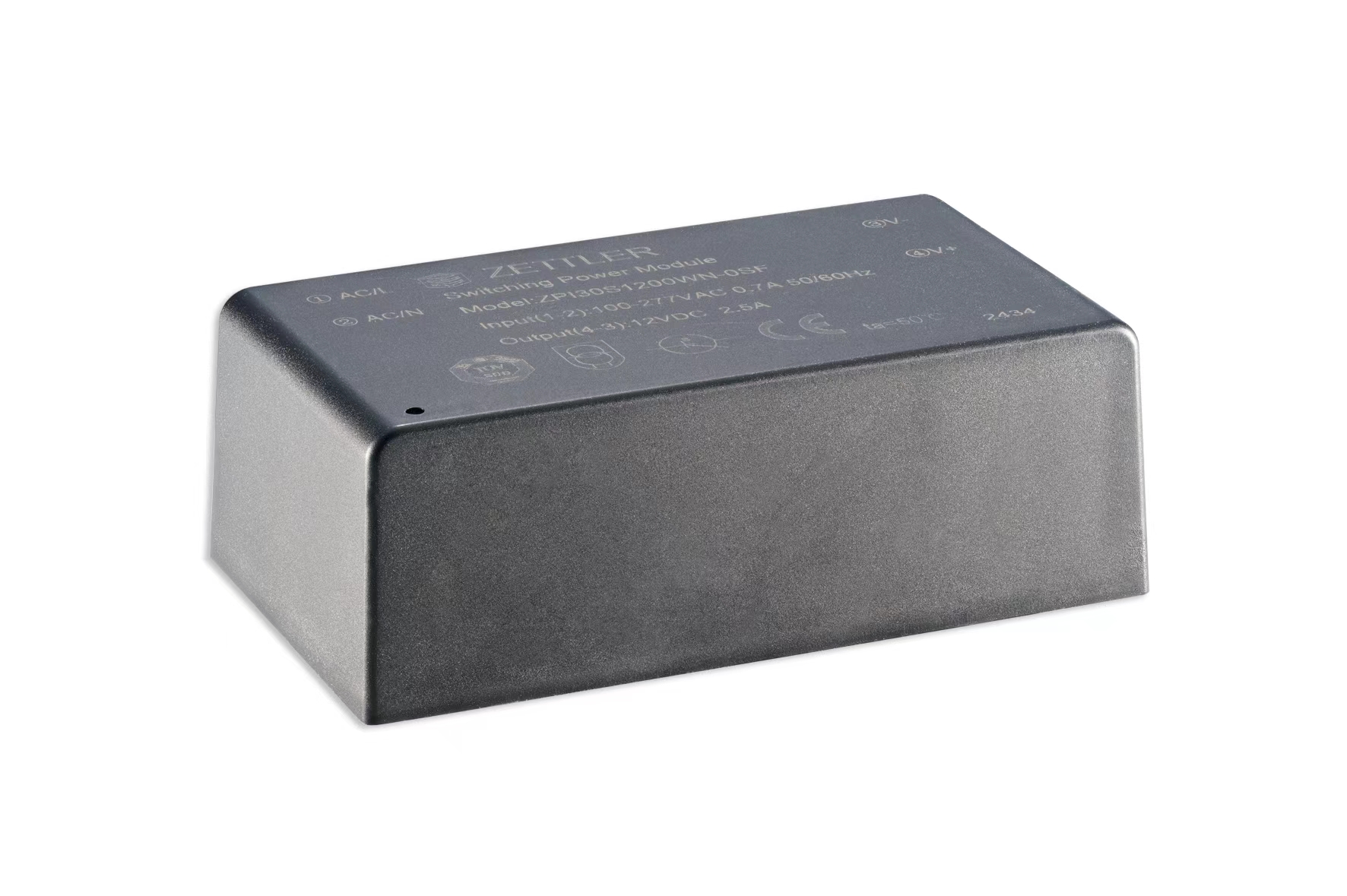
ZETTLER Magnetics introduces the new ZPI30SXX00WN-0SF switching power supply – a compact, robust solution for demanding industrial applications. With an output of 30W, a wide input voltage range and comprehensive protection functions, it guarantees a reliable power supply, even under extreme conditions.

ZPI30 switching power supply series.jpgInnovative features for a wide range of applications 

ZETTLER's ZPI30SXX00WN-0SF model offers numerous advanced features, free from organic silicon and phosphorus, including a high energy efficiency of 85%, a wide input voltage range from 90 VAC to 305 VAC, as well as protection functions against overvoltage, overcurrent and short circuits. 

With its compact design, the module is particularly suitable for applications in industry and in e-charging systems. It also meets international standards such as EN62368-1 and EN55032 Class B for electrical safety and electromagnetic compatibility.

Robust and versatile

Thanks to the wide operating temperature range of -30°C to +70°C and a high isolation voltage of 3000 VAC, the ZPI30SXX00WN-0SF offers exceptional reliability in harsh environments. The integrated EMI filter and low standby power consumption (<0.1W) make the module particularly environmentally friendly and meets the highest efficiency requirements. 

List of ZPI30 SMPS Modules

Model No.

Output Power

DC Voltage

Rated Current

Efficiency

Ripple Noise

Ambient temp.

Weight

Approvals

ZPI30S1200WN-0SF

30W

12VDC

250mA

85%

150mV

50°C

105g

TÜV

ZPI30S1500WN-0SF

30W

15VDC

2000mA

85%

200mV

50°C

105g

TÜV

ZPI30S1800WN-0SF

30W

18VDC

1670mA

85%

220mV

50°C

105g

TÜV

ZPI30S2400WN-0SF

30W

24VDC

1250mA

85%

240mV

50°C

105g

TÜV

For samples and data sheet of this new ZPI30SXX00WN-0SF SMPS series or similar solutions or to discuss the wide variety of application opportunities for the range of ZETTLER Magneticsplease visit www.zettlercn.com or contact us at sales@zettlercn.com.


electronica.png

Zettler Group, a professional and leading electronic products and solutions provider, specialized in design and manufacturing of Displays products, Power modules, Transformers and Relays, will participate in electronica 2024 in Munich, Germany from Nov 12th – 15th, 2024.

We sincerely invite you to visit our booth A2.362 to get your own picture of ZETTLER’s competence as a leading Electronic Components and Integrated Solutions Provider !

We're looking forward to seeing you in the exhibition.


TEL: +86 592 2631586          FAX: +86 592 2631599

EMAIL: sales@zettlercn.com     Web: www.zettlercn.com


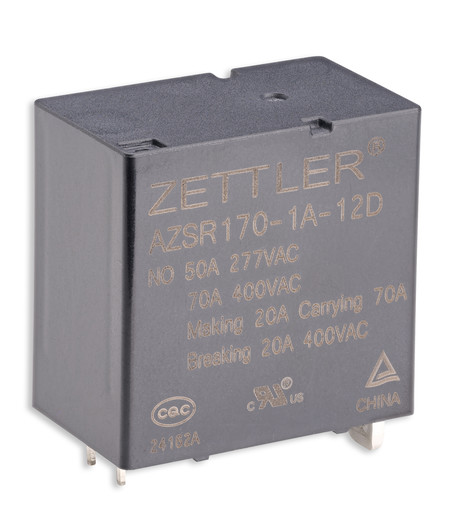
With a switching capacity of up to 70 amps / 600 VAC (normally open contact 1FormA) and a optional normally closed mirror contact (1FormB) for welding monitoring, this relay sets new standards in terms of performance and reliability in a compact design. 

AZSR170-460x524.jpgThe AZSR170 offers an impressive switching performance of up to 50,000 switching cycles and a variety of features, including optional monitoring contact according to EN60947-4-1 and a large contact gap of 3.42 mm.

With TüV, UL/CUR and CQC approvals, it ensures the highest safety standards and reliability in various applications.

For samples and data sheets of these new AZSR170 relay series or similar solutions or to discuss the wide variety of application opportunities for the range of ZETTLER Relays,For more information, please visit www.zettlercn.com or contact us at sales@zettlercn.com.


It is important to recognize the differences between metal and resin bond tools when choosing diamond tools for grinding or polishing. The effectiveness and caliber of your work may suffer if you select the incorrect kind of tool because they are made for different jobs, materials, and working conditions. Comprehending the characteristics and benefits of metal bond diamond tools and resin bond diamond tools is crucial for making an informed decision.


Metal bond diamond tools are highly durable and aggressive, making them ideal for heavy-duty grinding tasks. These tools excel at working on tough materials such as concrete, granite, and stone, where removing excess material quickly is required. The metal matrix holds the diamond particles firmly, allowing for extended tool life, especially in high-friction environments. If your work involves substantial material removal or surface preparation, TransGrind metal bond diamond tools are the best choice for the job.


On the other hand, resin bond diamond tools are softer and more flexible, designed for polishing and finishing tasks. They offer a smooth finish and are perfect for applications where precision and a high-quality surface finish are required. Resin bond tooling excels in grinding softer materials like marble or for fine-tuning after using metal bond tools. They are also a better choice for working on delicate surfaces where aggressive grinding could cause damage.


TransGrind metal bond diamond tools


Choosing between metal bond and resin bond tools largely depends on the material hardness and the phase of your project. For initial, aggressive grinding on hard surfaces like concrete or stone, metal bond tools are the ideal choice. For softer materials or polishing tasks that require finer work, resin bond tools will deliver superior results. Often, professionals use metal bond tools for the first stages of grinding and switch to resin bond tools for the finishing process.


To sum up, knowing your material and the work at hand is essential to making the best decision. Resin bond tools will give you the smooth results you need for finishing and polishing, whereas metal bond tools are best for heavy grinding. You may make sure that the task is done quickly, the finishes are excellent, and the tool lasts longer by choosing the right diamond tool.

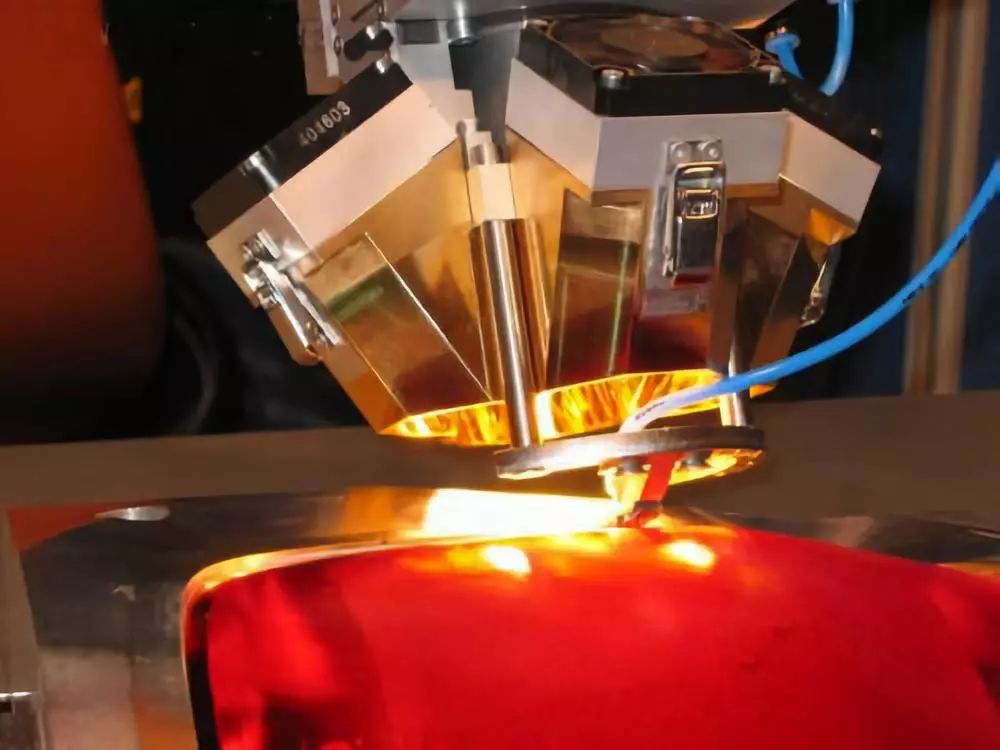
Laser welding is a welding method that uses a high-energy-density laser beam as a heat source, that is, laser radiation heats the surface of the workpiece, and the surface heat diffuses into the interior through heat conduction to melt the workpiece and form a specific molten pool. The laser beam passes through the upper layer of light-transmitting material, and then is absorbed by the lower layer material, and the laser energy is absorbed and converted into heat energy, since the two layers of materials are pressed together. Thermal energy is conducted from the absorbing layer to the light-transmitting layer, causing the two layers of material to melt and bond.

Laser Welding Plastic

It can be seen that the energy of the laser beam must be absorbed by the plastic to achieve a good welding effect, so the CO2 laser is generally used for plastic laser welding. Also, not all plastics can be welded with laser welding. Plastics can be divided into thermoset and thermoplastic. Among them, thermosetting plastics are not reproducible and cannot be welded, while thermoplastics will melt after reheating (you can use heating and cooling to make them reversible), which is a so-called physical change, so it has weldability.


Compared with other welding methods, laser welding has the characteristics of high speed and good effect. way to weld complex parts, such as plastics containing circuit boards. Industries such as automotive, medical, consumer electronics, and food are ideal application areas for laser welding.


1. Automotive industry

Plastic laser welding machines are widely used in the automotive industry, such as automatic door locks, engine sensors, cab racks, fuel nozzles, gear shift racks, etc. Some models have also used laser welding for taillights.


2. Medical field

Plastic laser welding machines can be used to manufacture liquid storage tanks, liquid filtering equipment, hose connectors, ostomy bags, hearing aids, implants, microfluidic devices for analysis, and more.


3. Packaging industry

For example, the packaging of advanced industrial products, using plastic film welding technology, can obtain plastic packaging with high processing speed, reliable seams and beautiful appearance. Laser welding connection of plastic outer packaging material. Plastic materials are thermoplastics and elastomers.


Laser welding plastics has the comprehensive advantages of low cost, no pollution, high speed, convenient processing, easy realization of precise numerical control, wide application range of raw materials, good bonding and manufacturability. The application of plastic laser welding will become more and more extensive, and the technology will become more and more mature. In order to meet the growing demand for transparent plastic products in the industrial, medical and scientific research markets, Nanjing Hecho Technology provides various customized High-energy Transmission Optical Fiber for the laser plastic welding industry, with high transmittance, good uniformity, and high-energy transmission. Advantages, widely praised by the market.