There could be several reasons why a laser machine fiber-optic cable broke:


1.Mechanical stress: Laser machine fiber-optic cable are often subjected to mechanical stress due to factors such as bending, twisting, or tension. Over time, this stress can weaken the fiber and eventually lead to a break.


2.Excessive power levels: If the laser machine is operated at power levels beyond the recommended specifications for the fiber, it can cause excessive heating and damage the fiber, leading to a break.


3.Contamination: Foreign particles or contaminants on the fiber's surface can interfere with the transmission of laser light, causing localized heating and eventual breakage.


4.Aging and wear: Like any material, fibers can degrade over time due to aging or wear and tear. This degradation can weaken the fiber's structure and make it more prone to breaking.


5.Improper handling: Rough handling or mishandling of the fiber, such as excessive bending, sharp bends, or tugging, can put stress on the fiber and cause it to break.


6.Manufacturing defects: In some cases, the fiber may have had undetected defects introduced during the manufacturing process, which can lead to premature failure.


It is important to note that proper maintenance, regular inspections, and adherence to manufacturer's guidelines can help minimize the risk of fiber breakage and ensure the longevity of laser components.


In today’s fast-paced world, video conferencing has become an integral part of our everyday professional lives. With the increasing demand for high-quality virtual communication, the need for advanced lenses designed specifically for video conferencing has also emerged. One such lens that stands out is the M8*P0.35 Thread Lens.

The M8*P0.35 Thread Lens is a remarkable piece of optical equipment that offers exceptional image quality, ensuring crystal-clear video conferencing experiences. Its unique thread design makes it easy to attach and detach the lens from compatible devices, providing effortless versatility.

Intelligent Electronic Device Monitoring Lens is another noteworthy lens option for those seeking enhanced monitoring capabilities during video conferences. This lens integrates intelligent features that enable real-time monitoring of electronic devices, giving users the ability to easily supervise critical systems, ensuring smooth and uninterrupted video conferencing sessions.

When it comes to video conferencing, quality matters the most. That’s why investing in a high-quality lens is crucial to capture every detail accurately and create a realistic meeting atmosphere. A lens specifically engineered for video conferencing offers improved light sensitivity, reduced distortion, and enhanced color reproduction, resulting in sharp, lifelike images that convey a sense of presence.

For professional-grade video conferencing, it’s essential to rely on lenses that are specially designed to meet the demands of such environments. These lenses are optimized to provide exceptional performance in terms of image quality, chromatic aberration reduction, and precise autofocus capabilities. Utilizing a professional-grade video conference lens ensures optimal visibility and clarity, facilitating better interactions and seamless communication during virtual meetings.

To procure the finest video conference lenses, it is crucial to partner with a reputable supplier. A reliable video conference lens supplier understands the importance of superior image quality, durability, and compatibility. They offer a wide range of lenses tailored to meet various video conferencing requirements, ensuring a seamless integration with different devices, software, and platforms.

In conclusion, the M8*P0.35 Thread Lens, Intelligent Electronic Device Monitoring Lens, and high-quality lenses designed explicitly for video conferencing provide invaluable advantages for professionals seeking superior image quality, monitoring capabilities, and overall performance. Partnering with a trusted video conference lens supplier will guarantee access to the most advanced lenses that elevate virtual meetings to the next level. Embrace these technological wonders and unlock a new dimension of immersive video conferencing experiences!

In healthcare environments, it is essential to keep spaces clean and sanitary for the safety of patients and the efficiency of the facility. Terrazzo flooring provides several distinct hygienic advantages, making it a preferred option for hospitals, clinics, and other medical establishments. This flooring not only looks appealing but it is also designed to help maintain a sterile environment.


One of the key benefits of terrazzo is its non-porous surface, which prevents the buildup of bacteria, mold, and other contaminants. Unlike carpets or tiled floors with grout lines, terrazzo’s seamless design eliminates small gaps where germs can hide and multiply. This characteristic is especially important in areas like operating rooms and patient care areas, where cleanliness is crucial.


Additionally, terrazzo is well-suite for healthcare environments due to its durability and low maintenance needs. It can endure the heavy foot traffic and frequent cleaning typical in hospitals without deteriorating or needing replacement. With regular cleaning , the floor will stays hygienic, and its chemical resistance allows for the use of strong disinfectants without harming the surface.


terrazzo flooring


Terrazzo also enhances indoor air quality, which is vital in healthcare settings where air circulation and cleanliness affect patient recovery. Its smooth, non-porous surface does not trap dust, allergens, or harmful pathogens. Furthermore, the material does not release volatile organic compounds, which can lead to air pollution and respiratory problems, especially in sensitive environments like hospitals.


TransGrind Diamond Tooling is a professional manufacturer and supplier of premium diamond grinding tools. Our tools such as diamond cup wheels are crafted for high performance, durability, and precision, ensuring optimal results in grinding and polishing tasks. To explore our wide range of products, please visit us at www.transgrindtools.com.

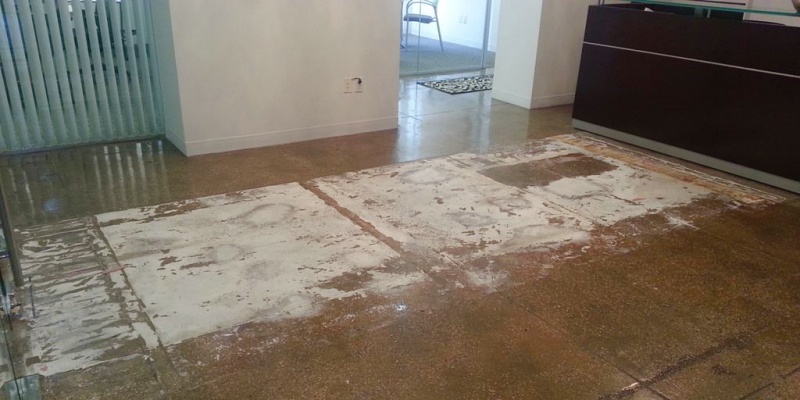
Terrazzo floors are celebrated for their beauty, durability, and versatility, therefore, people usually choose them for both commercial and residential spaces. However, when faced with the challenge of removing adhesives residue from terrazzo floors, it can be a daunting task. Sticky residue from carpet installation, adhesive tapes, or other sources can mar the pristine surface of terrazzo.


Begin the process of removing adhesive residue by employing gentle techniques. Use a plastic putty knife or scraper to carefully scrape off as much of the residue as possible without scratching the terrazzo. Be cautious and gentle to avoid damaging the surface. Once most of the adhesive residue is removed, move on the next step.


After scarping away the majority of the residue, mix mild liquid dish soap with warm water to create a solution. Apply the solution to the affected area and give it a few minutes to loosen the stubborn residue. Then, using a soft-bristle brush or non-abrasive sponge, gently scrub the adhesive. Rinse the area with clean water and ensure it is thoroughly dried.


diamond floor grinding tooling


For more persistent adhesive residue, we can employ the use of diamond grinding tools, which are specifically designed for terrazzo floors. Using diamond floor grinding tooling embedded with industrial-grade diamonds to remove thin layers of material and smoothen the surface. This method is effective at eliminating stubborn adhesive residue from terrazzo while maintaining the integrity of the floor.


TransGrind Diamond Tools is a professional manufacturer and supplier of premium diamond grinding tools. Our tools are crafted for high performance, durability, and precision, ensuring optimal results in grinding and polishing tasks. To explore our wide range of products, please visit us at www.transgrindtools.com.


The walkie-talkie explosion in Lebanon has attracted global attention and profound reflection on the safety of communication equipment.


Several potential causes may have led to this tragic explosion in Lebanon. Firstly, experts speculate that the 2 way radios might have been internally rigged with explosive detonators. Modern communication devices typically house components such as batteries and circuit boards; if maliciously fitted with explosive devices, such as mini detonators, during manufacturing or supply chain processes, these devices could be remotely triggered upon receiving specific signals or meeting preset conditions, leading to explosions.


Secondly, issues with the walkie-talkie's battery could also be a cause of the explosion. Although modern battery manufacturing processes are relatively mature, lax quality control or design flaws can still lead to explosions due to overheating or short circuits. However, considering the scale and impact of this explosion, mere battery failure seems insufficient to account for the entire situation.


Furthermore, some analyses suggest that these communication devices might have been modified at the production level, with undetectable explosives implanted. Such actions could involve complex supply chain infiltration and exploitation of security vulnerabilities. If true, this not only exposes significant flaws in equipment manufacturers' supply chain management but also poses a serious challenge to global safety standards for communication devices.


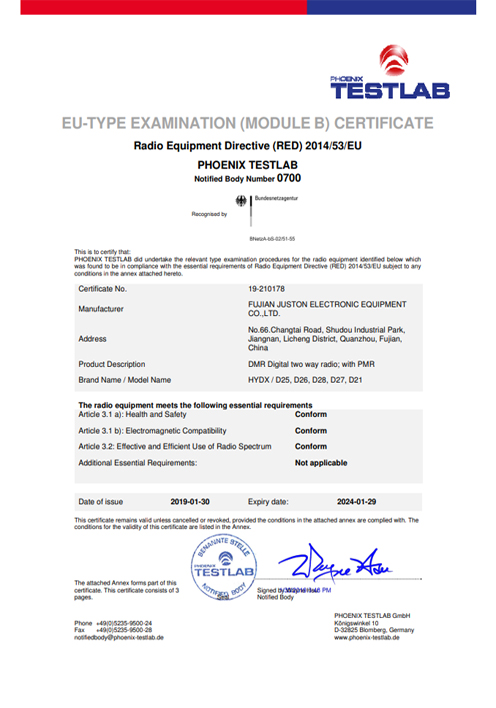
In the meantime, the incident in Lebanon has also alerted global manufacturers to the importance of product safety. In contrast, the walkie-talkies produced by Juston Electronic Equipment Co., Ltd. strictly adhere to international safety standards and undergo rigorous quality control from design to production.


Stringent Factory Testing: Each walkie-talkie undergoes a series of safety and performance tests before leaving the factory to ensure the product's stability and safety under various conditions.

International Safety Certifications: Juston walkie-talkies have obtained international safety certifications such as CE, FCC, IC, and RoHS, signifying compliance with global safety standards.


Use of Safe Materials and Technology: Juston utilizes advanced materials and technology in the design and production process to ensure the safety and durability of its products.

Juston's walkie-talkies are widely used in various fields including public safety, logistics, and tourism, and their reliability and safety have been recognized by customers and verified by the market.

In the future, Juston needs to continue to build itself and bring safer and more convenient communication experience to more industry customers.

One day after thousands of pagers exploded across Lebanon, more explosions of handheld devices, including uhf handheld 2 way radio, mobile phones, laptops and even solar power cells, have killed at least 26 people and injured  more than 3000.


Reports on Wednesday of several blasts quickly spread on messaging apps with people sharing images of exploded walkie-talkies and residential buildings on fire.

 
Japan's Icom Inc., whose brand appears on long range walkie-talkie that exploded in Lebanon, said it halted production a decade ago of the model allegedly used in the attacks and is still investigating the situation.
 
Icom exported its IC-V82 2 way radios to regions including the Middle East until October 2014, when it stopped making and selling the devices, the Osaka-based company said in a statement Thursday. It has also halted production of the batteries needed to operate the main unit, it said.
 
Among the many outstanding questions is how explosive materials were planted in the devices. If the Icom walkie-talkies were first manufactured a decade ago, it’s possible they were modified well after sale to their original customers. The company can’t determine if the products are their own, it said.
 

The company said all its radios are manufactured at a factory in Wakayama Prefecture, adding that it follows safety protocols outlined by government regulations and does not outsource production overseas.


Given that photographs of the devices show severe damage around the battery compartment, the batteries may have been modified with explosives after procurement, Icom director Yoshiki Enomoto was quoted as saying in a Kyodo report.

 
The detonations of everyday electronics may herald a new type of terrorism, according to Mitsuru Fukuda, professor of risk management at Nihon University. "This may increase pressure on companies to expand risk oversight of their supply chains” to include distribution and delivery, he said.


In the face of emergencies, the safety performance of communication equipment is crucial. JUSTON is well aware of this and always adheres to the design philosophy of "safe&reliable, creating excellent quality," committed to developing products that can withstand the test of extreme conditions. Our communication equipment has excellent impact resistance and durability, ensuring normal operation even in hazardous environments.


Introducing CIQTEK tungsten filament Scanning Electron Microscope SEM3200 provides researchers with clear nanoscale images, allowing them to examine the microstructure and morphology of the coating layers visually. Additionally, the equipped Energy Dispersive Spectrometer (EDS) enables precise analysis of material composition and element distribution, effectively guiding process optimization in research and development.

- Dr. Zhang, Head of Major Customers/Quality Director

Optical films

Coating: Giving Products a "Super Nanocoating"


The development of coating technology not only showcases the depth of materials science but also demonstrates the precision manufacturing processes. Dr. Zhang explains, "Our company has developed superior-performing coatings such as diamond-like carbon (DLC)/ titanium-aluminum-carbon (TAC) films, nitride films, carbide films, high-density metal/alloy films, and optical films. These coating layers are like giving products a 'super nanocoating'."

 Diamond-like carbon (DLC)


CIQTEK Scanning Electron Microscope Enhances the Quality of Nanocoating Layers


Dr. Zhang states, "With the SEM3200, we can readily detect the total thickness of the coating layers, as well as the thickness and composition of each designed layer (substrate layer, transition layer, surface layer) in the samples provided by customers. Our in-house research and development can quickly provide design solutions. This enhances the efficiency of coating process development."

 High density metalalloy films

The SEM3200 plays a crucial role in research and development and also acts as a key tool in quality control. "We can use it for failure analysis," says Dr. Zhang."Through comprehensive testing and characterization, we can identify the root causes of defective products, continuously improving product quality and yield."


Scanning Electron Microscopes Facilitate the High-quality Development of Manufacture 


Dr. Zhang expresses that the SEM3200 not only operates in good condition with a user-friendly interface and high automation but also receives prompt responses from the CIQTEK after-sales team, solving many practical problemsThis not only reflects the outstanding performance of CIQTEK products but also demonstrates the significant role of high-end scientific instruments in supporting the development of high-tech enterprises.


In the future, CIQTEK will continue to provide first-class research solutions for more high-tech companies like coating, jointly promoting the flourishing development of the scientific and technological industry.

The main pollutants in water bodies include pharmaceuticals, surfactants, personal care products, synthetic dyes, pesticides, and industrial chemicals. These pollutants are challenging to remove and can adversely affect human health, including the nervous, developmental, and reproductive systems. Therefore, protecting water environments is of utmost importance.


In recent years, advanced oxidation processes (AOPs) such as Fenton-like reactions, persulfate activation, and UV-light-induced AOPs (e.g., UV/Cl2, UV/NH2Cl, UV/H2O2, UV/PS) as well as photocatalysts (e.g., bismuth vanadate (BiVO4), bismuth tungstate (Bi2WO6), carbon nitride (C3N4), titanium dioxide (TiO2) have gained attention in the field of water treatment and environmental remediation.


These systems can generate highly reactive species such as hydroxyl radicals (•OH), sulfate radicals (•SO4-), superoxide radicals (•O2-), singlet oxygen (1O2), etc. These techniques significantly enhance the removal rates of organic pollutants compared to conventional physical and biological methods. The development of these water treatment technologies greatly benefits from the assistance of Electron Paramagnetic Resonance (EPR) technology.


CIQTEK offers the desktop Electron Paramagnetic Resonance spectrometer EPR200M and the X-band continuous-wave Electron Paramagnetic Resonance spectrometer EPR200-Plus, which provide solutions for studying photocatalysis and advanced oxidation processes in water treatment.


Application Solutions of Electron Paramagnetic Resonance (EPR) technology in water treatment research


- Detect, identify, and quantify reactive species such as •OH, •SO4-, •O2-, 1O2, and other active species generated in photocatalytic and AOPs systems.


- Detect and quantify vacancies/defects in remediation materials, such as oxygen vacancies, nitrogen vacancies, sulfur vacancies, etc.


- Detect doped transition metals in catalytic materials.


- Verify the feasibility and assist in optimizing various parameters of water treatment processes.


- Detect and determine the proportion of reactive species during water treatment processes, providing direct evidence for pollutant degradation mechanisms.

 Electron Paramagnetic Resonance


Application Cases of Electron Paramagnetic Resonance (EPR) technology in water treatment research


Case 1: EPR in UV/ClO2-based advanced oxidation technology


- EPR study of the degradation process of fluoroquinolone antibiotics in a UV-mediated AOPs system.


- Degradation of pharmaceuticals and personal care products (PPCPs) in water by chlorine dioxide under UV conditions.


- EPR detection and qualitative analysis of •OH and singlet oxygen as active species in the system.


  • - Increase in •OH and 1Oconcentrations with longer irradiation times, promoting antibiotic degradation.
  •  

- EPR detection of •OH and 1O2 concentrations can be used to optimize PPCPs treatment processes.

 EPR in UVClO2 based advanced oxidation technology

EPR in UVClO2 based advanced oxidation technology

Case 2: EPR in Fenton-like advanced oxidation technology


  • - Degradation of phenylurea herbicides (e.g., isoproturon, linuron) in water by Fenton-like reactions.
  •  
  • - EPR detection, identification, and quantification of all reactive species in the system.
  •  
  • -EPR-assisted optimization of radical generation rates, such as pH, hydrogen peroxide concentration, transition metal ions, etc.
  •  

-Increased hydroxyl radical concentrations and enhanced pollutant degradation with the addition of cysteine and Cu2+.


-EPR detection and quantification of hydroxyl radicals can directly validate the herbicide degradation mechanisms.

 EPR in Fenton-like advanced oxidation technology

Case 3: EPR in TiO2-based photocatalysis technology


  • -In situ EPR reveals the promotion of phthalic acid esters (PAEs) degradation and mineralization in water by PAEs-TiO2, resulting in nearly 100% detoxification of water.
  •  
  • -In situ EPR detection of intermediate radicals, such as •OH and PAEs' semiquinone anions, during the opening process of PAEs.
  •  
  • -Combined in situ EPR and quantitative analysis suggest a higher level of opening formation on selective PAEs-TiO2 photocatalysts.
  •  

-Combining in situ EPR with UPLC-QTOF/MS provides insights into the degradation pathways of PAEs on PAEs-TiO2 and TiO2 photocatalysts.

 EPR in TiO2-based photocatalysis technology

Photocatalysis technology mainly relies on the absorption of solar energy by semiconductor photocatalysts, which generates separated photoinduced electrons and holes. These reactive species, such as •OH and •O2-, formed on the surface of the photocatalyst, can degrade pollutants through processes such as addition, substitution, and electron transfer.


Moreover, these techniques efficiently and broadly disinfect and sterilize water, leading to water purification and environmental restoration. The self-developed Electron Paramagnetic Resonance Spectrometer by CIQTEK can provide solutions for studying the mechanisms of reactive species, pollutant degradation pathways, and active sites of catalysts involved in water treatment processes.


In today’s ever-evolving technological landscape, controller boards play a pivotal role in numerous electronic devices. From LVDS controller boards and tablet motherboards to control board controllers and LCD controllers, these integral components are the backbone of smooth and efficient device operation. In this comprehensive guide, we delve into the world of controller boards, shedding light on their importance, functions, and the reliable PCBA suppliers that can fulfill your specific requirements.

Understanding Controller Boards

A controller board, often known as a PCB (Printed Circuit Board), is a vital electronic component responsible for facilitating communication between various hardware components within a device. Among the diverse types available, LVDS controller boards are particularly noteworthy. Short for Low Voltage Differential Signaling, LVDS technology provides improved data transmission efficiency and reduced power consumption compared to other alternatives.

LVDS Controller Boards: A Closer Look

LVDS controller boards are widely utilized in the display industry, especially for LCD screens. They serve as the pivotal link between your device’s graphics processor and the LCD panel, ensuring the precise rendering of images and videos. The high-speed data transmission capabilities of LVDS make it an ideal choice for applications that demand remarkable visual clarity and responsiveness.

The Significance of Tablet Motherboards

In the realm of tablets, motherboard selection is as crucial as it is varied. The motherboard acts as the central nervous system of the device, connecting all the components and enabling seamless communication between them. A high-quality tablet motherboard guarantees optimal performance, stability, and longevity, enhancing the overall user experience.

Paving the Path with Reliable PCBA Suppliers

When it comes to sourcing controller boards, tablet motherboards, or any PCBA components, partnering with a trustworthy supplier is paramount. A reputable PCBA supplier ensures not only the quality and reliability of the components but also provides customized solutions tailored to your specific needs. From prototype design to mass production, a reliable PCBA supplier can guide you through every step of the process, ensuring your project’s success.

Unleashing the Power of Control Board Controllers

Control board controllers hold the key to achieving enhanced functionality and control in various electronic devices. Whether it’s adjusting the brightness, contrast, or color temperature of an LCD screen, or managing the input/output operations of a gadget, control board controllers offer the flexibility and customization options needed to create user-friendly, feature-rich devices.

Embracing the Versatility of LCD Controllers

The LCD (Liquid Crystal Display) controller is another critical component often found in devices with a display. Its primary function is to convert the digital signals received from the graphics processor into the specific analog format required by the LCD panel, enabling the seamless visualization of content. LCD controllers are available in a range of configurations to accommodate different display resolutions and panel types, providing versatility and adaptability for diverse devices.

In conclusion, understanding the importance of controller boards, LVDS controller boards, tablet motherboards, control board controllers, and LCD controllers is crucial for anyone involved in the electronics industry. Equally important is partnering with a trusted PCBA supplier who can fulfill your specific requirements and provide guidance throughout the development process. By harnessing the power of these essential components and working with reliable suppliers, you can pave the way for a successful electronic device that meets and exceeds customer expectations.

LiDAR (Light Detection and Ranging) technology has revolutionized several industries, including autonomous vehicles, environmental monitoring, and geological surveying. At the heart of LiDAR systems is the laser diode, a compact and efficient light source. But what sets the 905nm laser diode apart in this realm?

The 905nm laser diode, also known as a laser LADAR (Laser Detection and Ranging) diode or a 905nm laser radar diode, is a type of high-power laser diode specifically designed for LiDAR applications. Its operating wavelength of 905nm falls within the eye-safe range, making it ideal for various safety-sensitive industries.

One of the key advantages of using 905nm laser diodes in LiDAR is their ability to provide long-range distance measurements with high accuracy. These diodes emit near-infrared light, which allows for improved range finding capabilities compared to other laser diodes operating at different wavelengths.

Furthermore, 905nm laser diodes offer exceptional power outputs necessary for robust LiDAR performance. High power laser diodes, such as the 905nm high-power laser diodes, enable LiDAR systems to generate and transmit intense laser beams over long distances, ensuring accurate detection and mapping of objects in real-time.

TO-Can laser diodes, a popular packaging option for 905nm laser diodes, provide durability and easy integration into LiDAR systems. Their compact size and efficient heat dissipation make them suitable for both mobile and stationary LiDAR applications.

When considering LiDAR implementation, it is crucial to opt for reliable and high-quality components, and 905nm laser diodes fit the bill. Their wavelength, power output, and compact form factor make them an ideal choice for various LiDAR deployment scenarios.

In conclusion, 905nm laser diodes offer significant advantages for LiDAR applications. Their eye-safe wavelength, long-range capabilities, high power outputs, and compatibility with TO-Can packaging make them an essential component in modern LiDAR systems. As the demand for LiDAR technology continues to rise, the 905nm laser diode proves itself to be the ideal choice for accurate and efficient distance sensing in a wide range of industries.